
New York is known for its heavy snow during the winter, so it is no wonder that snow removal business is on the rise. Of course, you cannot operate a business without proper insurance coverage. In fact, your personal insurance specifically excludes any “for profit” snowplow operations. Can you be a good neighbor and snowplow your neighbor’s driveway and be covered? Absolutely. But beware – as soon as you charge anything for that service, you become a business and need to have proper commercial insurance.
Liability Insurance is a foundation of every business insurance portfolio. Whether you are looking at Auto Liability or General liability insurance, both are very important when designing your insurance package.
As a snow remover, you and your employees are on the road at all hours of day and night. Rain, sleet, snow or blizzard it is your business to make the roads and parking lots safe for others. These less than ideal conditions and the sheer amount of time you are driving contribute greatly to the likelihood of an accident. Auto Liability insurance comes to the rescue when driving accidents occur. Examples of possible accidents include damaging a parked car while plowing a residential street or having an accident on the road. An auto liability policy will cover the damages to other person’s bodily injury and property damage (i.e. damage to their car).
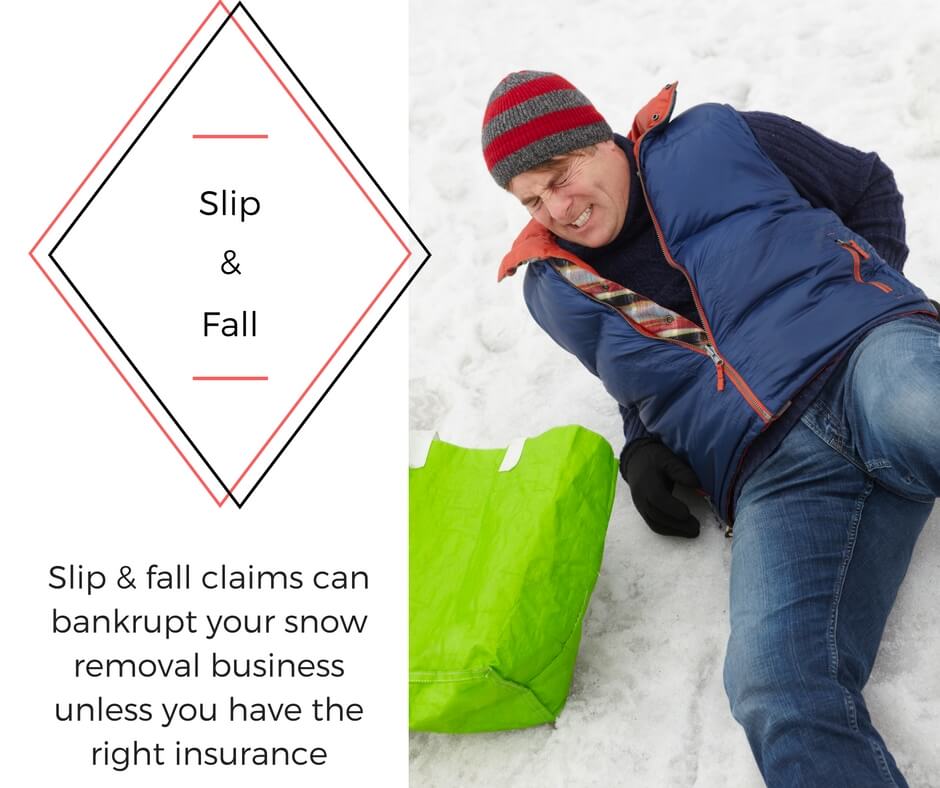
Another liability policy you need to carry is a General Liability policy. General Liability is designed to cover third party claims i.e. bodily injury or property damage as a result of your actions. In a snow removal business, the main concern is slip and fall claims. Since every policy is individually underwritten, the more you can show the underwriter your plan of minimizing these types of claims, the better rate discounts they can offer you.
An example of a supporting document would be a contract with your client that specifies where snow piles will be placed. Placing the snow piles away from where people usually walk will minimize the chance of the melt runoff freezing right on their path, thus avoiding a slip and fall.
Examples of other General Liability claims would include damaging church’s lawn with your snow removal equipment, libel, and slander, a damage to the asphalt, etc.
Umbrella Liability policy provides extra limits when you need them. Often a larger client or a municipality will want higher than normal limit of liability. To satisfy that requirement you can get extra limits through the liability policy.
As you can see, liability insurance is a powerful tool in your financial planning arsenal that is designed to protect your business assets and provide you protection against the common perils of doing business.